


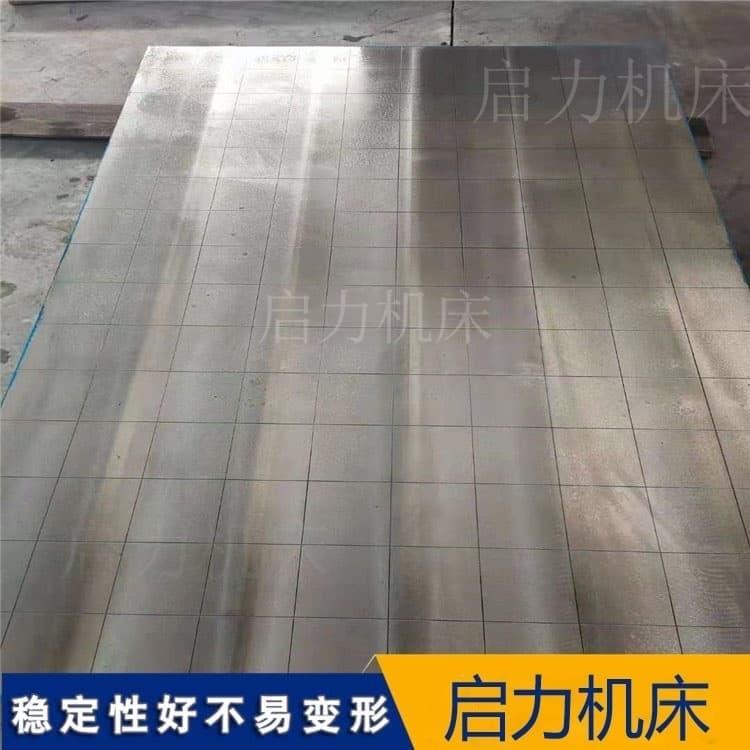
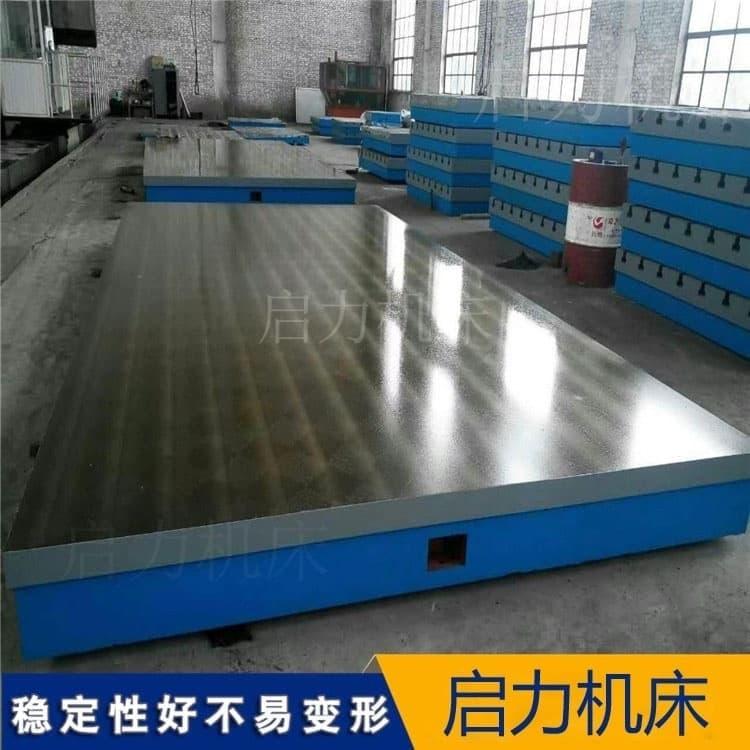
Cast iron test floor plate 1500×2000×300mm comprehensive test bench
Other Products


Application Research on the Integration of Test Bed Iron Floor and Motor Performance Testing
The test bed iron floor is a core facility throughout the entire process of automotive R&D, production, and quality inspection. From component assembly verification on the assembly line to performance testing in the laboratory, and even collision simulations under specific conditions, a stable and reliable cast iron platform is indispensable as the foundation. Different scenarios impose significantly varying performance requirements on cast iron platforms. Improper matching of technical parameters during selection may lead to distorted test data, equipment damage, or even safety incidents. The following sections detail the key technical parameters for selecting cast iron platforms in three core scenarios—assembly lines, conventional performance testing, and collision testing—to provide reference for the construction of test bed iron floors.
I. Assembly Line Test Bed: Emphasis on Load-Bearing Uniformity and Wear Resistance for Batch Assembly Inspection
The assembly line is a critical stage in automotive production. Cast iron platforms are primarily used for component positioning, dimensional verification, and assembly accuracy inspection. They must withstand frequent operations such as workpiece placement and fixture movement, demanding high load-bearing uniformity and surface wear resistance.
Rated Static Load: Assembly line platforms must accommodate components of varying weights, such as doors 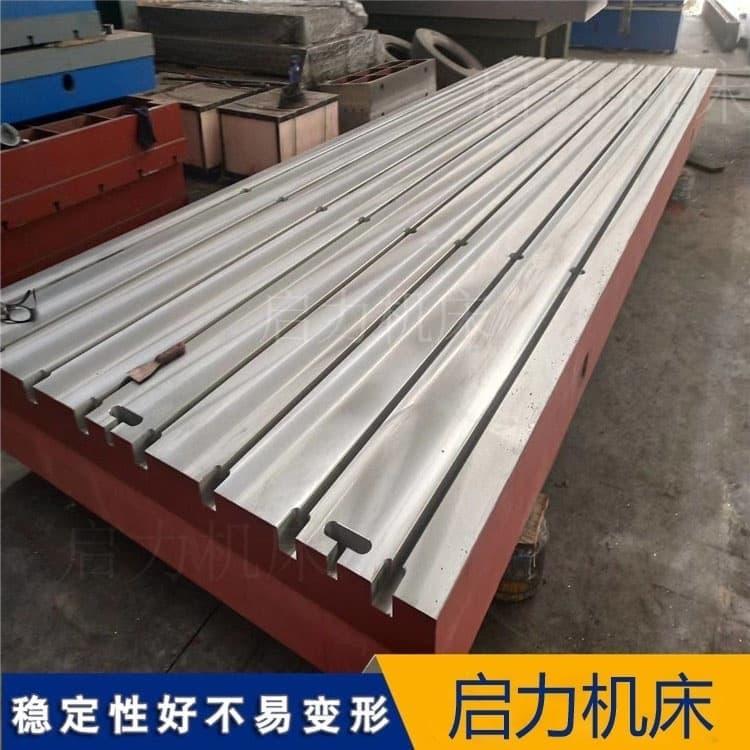
 assemblies (approx. 50-80kg) and chassis frames (500-800kg). The rated static load of the platform should be 3-5 times the weight of the heaviest workpiece. For example, when assembling an 800kg chassis frame, the platform's rated static load must be ≥2400kg. The material should be HT250 cast iron (tensile strength 250-300MPa) to ensure long-term uniform load-bearing without deformation.
Surface Hardness and Roughness: Frequent fixture friction requires the platform's working surface hardness to reach 170-220HBW, with a surface roughness of Ra≤1.6μm. This can be achieved through "fine planing + grinding" processes, which minimize scratches during workpiece placement and ensure the stability of positioning references. If roughness exceeds standards (e.g., Ra=3.2μm), component positioning deviations may reach ≥0.5mm, affecting assembly accuracy.
T-Slot Density: Assembly line fixtures are often modular in design. A dense layout of T-slots with 50-100mm spacing is recommended, with slot widths of 14-18mm (compatible with M12-M16 bolts) to facilitate quick fixture adjustments. Slot edges must be rounded (R0.5-R1mm) to prevent scratches on operators or fixture surfaces.
Flatness Grade: Assembly line inspections primarily focus on dimensional verification. Grade 2 accuracy (flatness ≤0.1mm/m) is sufficient. After leveling with a spirit level, ensure fixture installation horizontality ≤0.05mm/m to prevent assembly stress caused by tilting.
II. Conventional Performance Test Bed: Focus on Precision Stability and Vibration Resistance to Ensure Data Reliability
Conventional performance testing includes engine power testing, chassis suspension fatigue testing, brake performance testing, etc. It requires cast iron platforms to exhibit high precision and vibration resistance to avoid external interference affecting test data.
Flatness and Perpendicularity: Engine bench testing involves measuring output torque. Platform flatness must achieve Grade 1 accuracy (≤0.04mm/m), with perpendicularity between the work surface and side face ≤0.05mm/m. This ensures the alignment of the force sensor installation axis with the power output axis; otherwise, torque measurement errors may exceed ≥1%. "Manual scraping" processes are recommended to achieve 12-15 contact points within a 25×25mm area, enhancing precision stability.
The selection of cast iron platforms for test bed iron floors must align technical parameters with the scenario: assembly lines prioritize load-bearing uniformity and wear resistance, conventional performance testing focuses on precision stability and vibration resistance, and collision testing emphasizes load capacity and structural rigidity. The synergistic optimization of these parameters is fundamental to ensuring reliable test data from components to entire vehicles. With advancements in new energy vehicles and intelligent driving technology, test beds will demand even higher precision and response speeds from platforms. In the future, cast iron platforms may evolve toward "lightweight strength" (e.g., carbon fiber reinforcement) and "intelligent monitoring" (embedded stress sensors), providing more robust testing support for breakthroughs in automotive technology. For practical selection, joint simulation tests with equipment manufacturers and platform suppliers are recommended to ensure optimal parameter matching and maximize test bed performance.
Qili Machine Tool, Ms. Xie, 13785751790
| Industry Category | Hardware & Tools/Castings/Iron Castings |
|---|---|
| Product Category | |
| Brand: | 启力 |
| Spec: | 3000*5000 |
| Manufacturer: | 泊头启力机床 |
| Origin: | 111309 |


